Crowd size drives unit count more than any other factor. A common event-planning standard puts one portable toilet per 50 to 75 guests for a 4-hour event with no alcohol; add roughly 20% more units when beer or wine is…
Crowd size drives unit count more than any other factor. A common event-planning standard puts one portable toilet per 50 to 75 guests for a 4-hour event with no alcohol; add roughly 20% more units when beer or wine is served, because average visits rise. A 1,000-person festival at International Park with a beer tent therefore lands near 16 to 20 units rather than the 13 to 20 a dry event would need. Ordering to the standard, not the eyeball guess, is what keeps lines short and complaints off the organizer.
Unit type follows the guest profile. Standard flush-free units cover general-admission crowds and cost the least per unit. Flushing units with an interior sink suit VIP areas, vendor zones, and multi-day fairs where guests spend hours on site. ADA-compliant units are wheelchair-accessible with a 60-inch turning radius and a level entry; the Americans with Disabilities Act treats public events as needing accessible facilities, so at least one ADA unit per cluster is the working rule. Hand-wash stations with fresh-water tanks and soap round out food-service and festival setups. A festival block mixes all four: the bulk in standard units, a handful of flushing units near stages, one ADA unit per bank, and hand-wash stations by the food vendors.
Placement across Toledo neighborhoods changes the plan. Riverfront events at Promenade Park and International Park need units set on firm, level ground back from the seawall, with truck access for mid-event pumping on multi-day runs. Neighborhood festivals in the Old West End, Vistula, and Birmingham often stage on residential side streets where units must sit clear of driveways and hydrants. Open-field events near DeVeaux, Reynolds Corners, West Toledo, and the University of Toledo allow flexible spacing but need units anchored against wind on exposed grounds. Point Place, Ottawa Hills, Old South End, and Beverly setups are quoted the same flat-rate way. If it rains, units on grass in low-lying Lucas County parks can settle, so plywood boards under each unit keep them level.
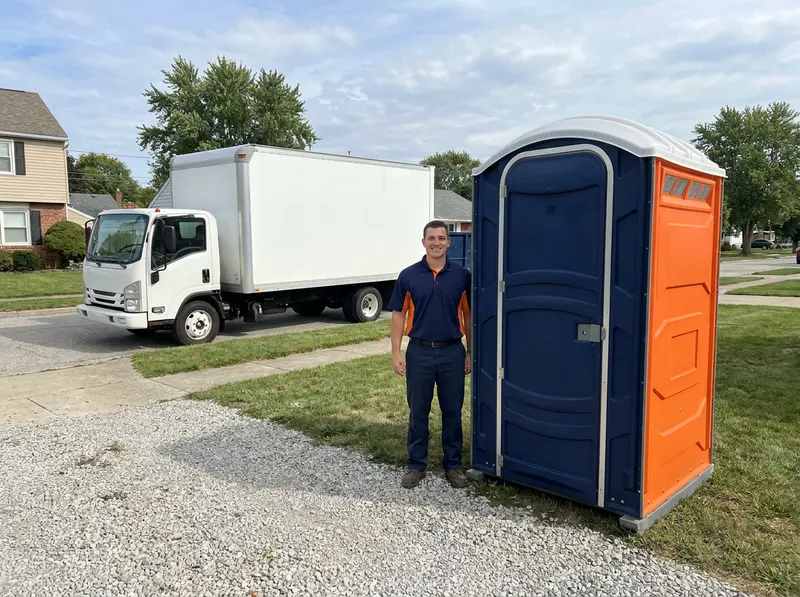
A festival rental is not a single job-site unit left for weeks; it is a coordinated bank delivered, serviced during the event, and pulled immediately after. The step sequence is simple. First, the headcount and event hours set the unit count. Second, the map is walked for truck access and level placement. Third, units drop the day before or the morning of. Fourth, multi-day events get overnight or between-session servicing. Fifth, every unit is removed on the agreed pickup date so the venue clears fast. The flat-rate figure is locked before delivery, with the exact total confirmed once the site and unit mix are set.
Every job gets a firm, written price after a free on-site visit.
Tell us about your festival & large-event toilet rental job in Toledo and we'll send a clear, written quote, usually the same day.
 Glass City Portable Toilet Rental